
If you own property in San Diego County, you've probably heard the buzz about building "extra" ADUs on your lot. It's not a rumor: California's ADU bonus program, layered with San Diego's own local incentives, really does let some homeowners build more units than the standard ADU rules allow. But the program was significantly reformed in 2025, and a lot of what's online is now outdated.
Here's what the San Diego ADU bonus program actually covers today, who qualifies, and what to expect if you go this route.
- What Is the San Diego ADU Bonus Program?
- How Many Units Can You Actually Build? (Updated for the 2025 Reform)
- Eligibility: Does Your Lot Qualify?
- The Deed Restriction Tradeoff
- Permitting Timeline in San Diego: What to Actually Expect
- Coastal vs. Inland: Why Location Inside San Diego County Matters
- Is the ADU Bonus Program Worth It?
- Frequently Asked Questions
- What is the San Diego ADU bonus program?
- How many ADUs can I build on my lot under the 2025 reform?
- Is there a grant to help pay for building an ADU in California?
- How long does the deed restriction last on a bonus ADU?
- What's the difference between an ADU and a Junior ADU (JADU)?
- Ready to See If Your Lot Qualifies?
What Is the San Diego ADU Bonus Program?
California's ADU bonus program (part of the state's 2024 ADU law updates) lets qualifying property owners build additional accessory dwelling units beyond the standard limit, as long as at least one of those units is deed-restricted as affordable housing for a set number of years. You can see the City of San Diego's official ADU Bonus Program page for the underlying mechanics.
San Diego layers its own Complete ADU Program on top of the state rules, which can include fee waivers and streamlined review for income-restricted units. In plain terms: the city wants more housing built, and it's willing to waive some costs if you agree to rent part of what you build below market rate.
This isn't a loophole. It's an intentional trade: you get to build more, and the city gets affordable units it didn't have to build itself.
How Many Units Can You Actually Build? (Updated for the 2025 Reform)
Here's something a lot of ADU content online still gets wrong: the program changed. On June 16, 2025, the San Diego City Council voted 5-4 to reform the ADU Bonus Program (see the full ordinance, O-2025-136), and those changes took effect in August 2025. If you're reading older articles or a contractor's outdated blog post, the numbers may no longer apply.
Under the current rules, your lot size sets a hard cap on total ADUs (this includes the bonus units, not just the standard allowance):
- Lots under 8,000 sq ft: maximum of 4 ADUs
- Lots between 8,001 and 10,000 sq ft: maximum of 5 ADUs
- Lots over 10,001 sq ft: maximum of 6 ADUs
On top of the unit caps, the reform added a few other rules worth knowing before you plan a project:
- Two-story height limit on ADUs: no more stacking a third story to maximize square footage
- Detached ADUs are still capped at 1,200 sq ft; converted ADUs (garage or existing structure conversions) have no size max under state law. (If you're weighing a full ADU against a smaller Junior ADU carved out of your existing home, see our ADU vs. JADU breakdown.)
- Cul-de-sac lots in high wildfire risk areas are no longer eligible for ADUs at all
- New infrastructure fees apply to help fund things like fire stations and libraries
- Parking requirements now kick in for properties located far from public transit, where they didn't before
Eligibility: Does Your Lot Qualify?
Before you plan a project around the bonus program, confirm the basics:
- Lot size: this is now the single biggest factor, since it directly determines your unit cap under the 2025 reform (see above)
- Zoning: bonus program eligibility is built around single-family (R-1) and some multi-family zones. Confirm your parcel's zoning through the City or County planning department before assuming eligibility. Our guide to ADU zoning laws breaks down what to check first.
- Wildfire risk designation: if you're on a cul-de-sac in a high wildfire risk zone, the bonus program is off the table entirely under the new rules
- Transit proximity: affects whether you'll need to include parking as part of your project
- Existing structures: how much of your lot is already built out affects what you can add without triggering additional review
The Deed Restriction Tradeoff
This is the part most homeowners underestimate. To access the bonus units, you agree to rent at least one unit at an income-restricted rate for a set term, often measured in decades, not years.
Before you commit:
- Understand exactly what rent you'd be able to charge under the restriction, and compare it honestly to market rent for that unit
- Know the term length you're signing up for: this isn't a short-term commitment
- Factor in how a long-term affordability restriction affects resale value and future flexibility for the property
For some homeowners, especially those planning to hold the property long-term or who want the extra unit for family, this tradeoff is a non-issue. For others planning to sell in five years, it can meaningfully change the math.
Permitting Timeline in San Diego: What to Actually Expect
This is where most online guides get vague. Here's the real timeline to plan around:
- Standard ADU permits through the City of San Diego Development Services Department (DSD) typically take 5 to 7 months to clear.
- The DSD usually issues first-round comments within 30 days, but the remaining months get eaten up by correction cycles going back and forth between you (or your contractor) and the city.
- Bonus ADUs add a step. Because bonus units require individual project conditioning, the DSD has to route your plans to the San Diego Housing Commission (SDHC) for review. That's a parallel timeline track running alongside your standard DSD review, not a replacement for it, so plan for it to add real time, not run concurrently for free.
- If you're in the Coastal Overlay Zone, add another 2 to 4 months if your project triggers a discretionary Coastal Development Permit (CDP). This affects homeowners in La Jolla, Del Mar, Solana Beach, Coronado, and other coastal-adjacent parcels.
Bottom line: if you're inland and doing a standard bonus ADU, budget for 6-9 months start to permit-in-hand. If you're coastal, budget for 8-13 months. Anyone quoting you a flat "3 months" timeline either hasn't done one of these in San Diego or is setting you up for a bad surprise. For a full breakdown of every step in between, see our complete ADU checklist.
Coastal vs. Inland: Why Location Inside San Diego County Matters
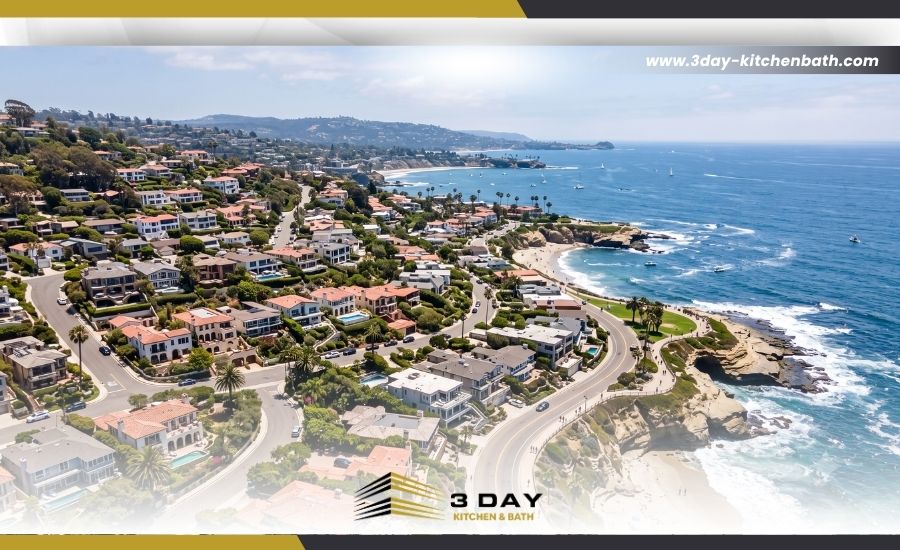
San Diego County isn't one uniform permitting environment. If your property sits inside the Coastal Overlay Zone (much of La Jolla, Del Mar, Solana Beach, Encinitas, and Coronado), a Coastal Development Permit adds real time and, often, an added layer of design review.
Inland cities and neighborhoods (Escondido, Poway, Ramona, El Cajon, Santee) generally move through standard DSD review without that extra layer, which is one reason inland ADU bonus projects tend to move faster than coastal ones.
If you're not sure which category your property falls into, that's one of the first things worth confirming before you get attached to a timeline.
Is the ADU Bonus Program Worth It?
For homeowners who want rental income, multi-generational housing, or simply more usable square footage on their lot, the bonus program can make sense, especially if the fee waivers offset a meaningful chunk of your permitting costs. It's also worth understanding how an ADU affects your property value before you commit to the deed restriction.
The math changes if you're planning to sell soon, since the deed restriction travels with the property. This is worth thinking through honestly before you start rather than after you've already committed to a design.
Frequently Asked Questions
What is the San Diego ADU bonus program?
It's a city and state incentive that lets property owners build more accessory dwelling units than standard zoning allows, in exchange for deed-restricting at least one unit as affordable housing. San Diego layers its own fee waivers and streamlined review on top of the state framework.
How many ADUs can I build on my lot under the 2025 reform?
It depends on lot size: a maximum of 4 ADUs on lots under 8,000 sq ft, 5 on lots between 8,001 and 10,000 sq ft, and 6 on lots over 10,001 sq ft. These caps took effect in August 2025 and apply regardless of how many bonus units you'd otherwise qualify for.
Is there a grant to help pay for building an ADU in California?
Yes, but it's a separate program from the San Diego bonus program. The CalHFA ADU Grant Program offers up to $40,000 to reimburse pre-development costs like permits, architectural fees, and soil tests. It's currently limited to low-income households, and funding availability changes, so confirm current status directly with CalHFA before counting on it.
How long does the deed restriction last on a bonus ADU?
Typically 15 years for moderate- or low-income restricted units, though exact terms can vary by program and income tier. This is a long-term commitment that travels with the property, so factor it into your resale plans before you commit.
What's the difference between an ADU and a Junior ADU (JADU)?
An ADU is a fully independent unit with its own kitchen, bathroom, and entrance, while a JADU is a smaller unit (up to 500 sq ft) carved out of your existing home's footprint, often sharing a bathroom with the main house. See our full ADU vs. JADU breakdown for the complete comparison.
Ready to See If Your Lot Qualifies?
Every lot in San Diego County is different, and the bonus program eligibility depends on your specific zoning, lot size, and location. Cost varies just as much: size, finish level, and foundation type all move the number, so we don't quote a range publicly. If you're considering an ADU bonus project anywhere from Oceanside to Chula Vista, Escondido to Coronado, our San Diego ADU builders can walk your property and give you a real, custom quote, no generic answers, no guesswork.

3 Day Kitchen & Bath
10620 Treena St Suite 230,
San Diego, CA 92131
Recent Posts
-

8 Signs It's Time to Remodel Your Kitchen
Sep 08, 2026