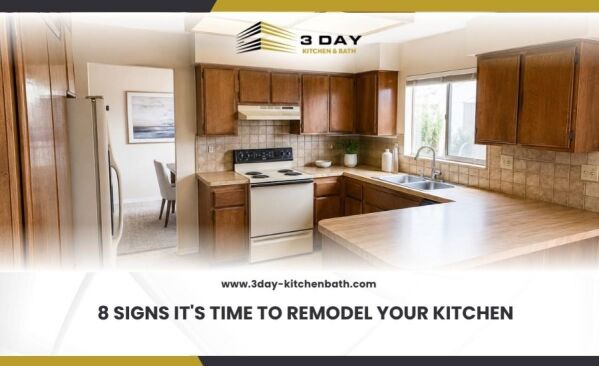
Most homeowners don't wake up one day and decide to remodel a kitchen. It's usually a slow build: a drawer that's stuck, a stove burner that only half-works, counter space that disappears the moment two people try to cook at once. If any of that sounds familiar, here are eight signs worth paying attention to, and what each one usually means for planning a kitchen remodel.
- Your Appliances Keep Breaking Down (or Are Simply Outdated)
- You've Run Out of Storage and Counter Space
- The Layout Fights You Every Time You Cook
- Your Circuits Can't Keep Up With Modern Appliances
- Cabinets, Countertops, or Flooring Are Visibly Failing
- The Kitchen No Longer Matches How You Actually Live
- You're Planning to Sell in the Next Few Years
- It's Been Longer Than You Think Since the Last Update
- Frequently Asked Questions
- How do I know if I need a full remodel or just an update?
- How long does a typical kitchen remodel take?
- Is it worth remodeling a kitchen if I'm planning to sell soon?
- What's the first step in planning a kitchen remodel?
- Can I remodel my kitchen without upgrading the electrical panel?
Your Appliances Keep Breaking Down (or Are Simply Outdated)
A repair here and there is normal. A pattern of repairs (the dishwasher last spring, the fridge compressor this winter, the oven's uneven heat you've just learned to work around) is different. At that point you're not maintaining appliances anymore, you're managing their decline. The EPA's ENERGY STAR program notes that certified appliances use meaningfully less electricity than older, non-certified models. A refrigerator or dishwasher that's a decade or more old is very likely costing you more to run than the sticker ever suggested, even on the days it's working fine.
You've Run Out of Storage and Counter Space
If your counters have become permanent storage for the stand mixer, the air fryer, and the cutting board because there's nowhere else for them to live, that's not a clutter problem. It's a layout problem. Kitchens designed decades ago were built around a smaller, simpler appliance lineup than most households run today. When counter space disappears under daily-use items, prep space shrinks with it, and cooking gets harder than it needs to be.
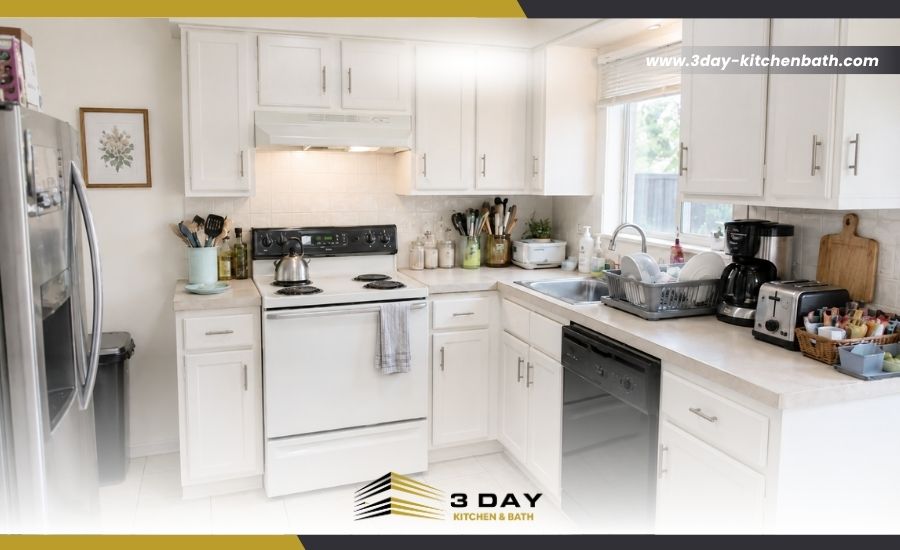
The Layout Fights You Every Time You Cook
Watch how you actually move through your kitchen on a normal weeknight. If you're constantly crossing paths with whoever else is cooking, or the fridge, stove, and sink are spread out in a way that turns dinner into a hike, the layout is working against you. This is one of the harder signs to fix with small changes: a new backsplash won't shorten the distance between your stove and your sink.
Your Circuits Can't Keep Up With Modern Appliances
If a coffee maker, toaster, and air fryer running together trips a breaker, that's rarely a defective appliance. It's usually a kitchen wired for a different era of cooking. This is a classic case of outdated kitchen circuit requirements: older kitchens often share one circuit across an entire counter, and today's higher-draw countertop appliances simply weren't part of that original load calculation.
Cabinets, Countertops, or Flooring Are Visibly Failing
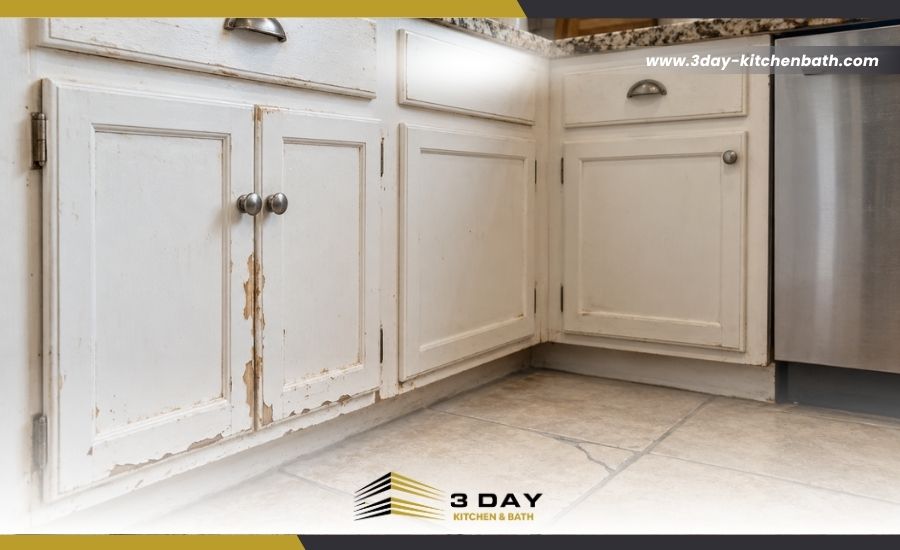
Swollen cabinet doors that won't close flush, laminate peeling at the seams, countertop stains that won't lift, grout that's cracked past the point of a quick regrout: these are wear signs, not style complaints. Once materials start failing structurally rather than just looking dated, patch fixes tend to become a repeating expense rather than a one-time job.
The Kitchen No Longer Matches How You Actually Live
A kitchen built for a household of two doesn't always work for a family of five. A layout designed around formal, separate rooms can feel closed off, too, if your household now gathers in the kitchen for everything: homework, video calls, weekend breakfasts. If you've changed how you use the space faster than the space has changed with you, that gap tends to grow more noticeable over time, not less.
You're Planning to Sell in the Next Few Years
Kitchens and bathrooms are consistently among the first things buyers evaluate on a walkthrough. If a sale is somewhere on your horizon, even a few years out, decide now whether you want to remodel for yourself and enjoy it in the meantime. Or hold off and let a future buyer factor an outdated kitchen into their offer. Either is a reasonable call. The mistake is not deciding on purpose.
It's Been Longer Than You Think Since the Last Update
Homeowners are often surprised when they actually count the years since their last kitchen update. Fifteen, even twenty years is common, and a lot changes in that stretch: appliance efficiency, storage design, code requirements, and simply what a functional kitchen is expected to do. If it's been that long, some of the signs above may already apply without having registered as "remodel-worthy" yet.
If a remodel ends up touching your kitchen's structure, plumbing, or electrical panel, know ahead of time when a building permit is actually required so it doesn't catch you mid-project. Cost is usually the next question once you've decided to move forward, and our how to budget for a home renovation guide covers realistic price ranges by project scope.
3 Day Kitchen & Bath has been designing and building kitchens across San Diego County, from La Jolla to Escondido, for homeowners working through exactly these decisions. Our design-build team handles everything from layout and cabinetry to the electrical work covered above. If any of these signs sound familiar, we're glad to take a look and talk through what your options actually are.
Frequently Asked Questions
How do I know if I need a full remodel or just an update?
If the issues are mostly cosmetic (paint, hardware, a backsplash), an update can go a long way. A full remodel makes more sense once you're dealing with structural wear, layout problems, or electrical capacity issues, since those usually can't be solved by swapping finishes.
How long does a typical kitchen remodel take?
Timelines vary by scope, from a focused refresh to a full gut-and-rebuild. We've broken down realistic timelines by project type in a separate guide, since "it depends" isn't a very useful answer on its own.
Is it worth remodeling a kitchen if I'm planning to sell soon?
Often yes, since kitchens are one of the first things buyers judge, but the right scope depends on your timeline and the rest of your local market. A remodel aimed at resale usually looks different from one aimed at years of daily use.
What's the first step in planning a kitchen remodel?
Start by naming the specific problems, not just "it looks old": storage, layout, electrical capacity, failing materials. That list becomes the actual design brief once you sit down with a contractor.
Can I remodel my kitchen without upgrading the electrical panel?
Sometimes, but not always. If you're adding several new dedicated circuits or major appliances, your existing panel may not have the spare capacity. Check that early rather than discovering it mid-project.

3 Day Kitchen & Bath
10620 Treena St Suite 230,
San Diego, CA 92131