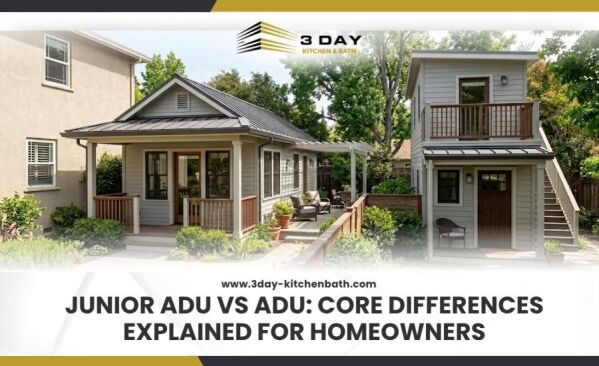
The primary difference between a junior ADU vs ADU comes down to size, location, and utility requirements. An Accessory Dwelling Unit (ADU) is a fully independent living space up to 1,200 square feet that you can detach entirely from your main house. A Junior Accessory Dwelling Unit (JADU) caps at 500 square feet, must exist within the walls of an existing residential structure, and can legally share central utilities—like a bathroom—with the primary home. Choosing the right layout requires you to understand local zoning laws, structural codes, and your specific budget constraints. If you're still weighing your options, our guide to the four main ADU types breaks down detached, attached, garage conversion, and JADU projects side by side.
Size, Cost, and Permit Requirements: Junior ADU vs ADU
Understanding the basic technical metrics helps you determine which project will physically fit on your property. This table outlines the primary specifications and restrictions of both units to help you compare your options accurately:
| Feature | Standard ADU | Junior ADU (JADU) |
| Primary Benefit | Complete privacy and higher rental yield. | Lower construction cost and faster permitting. |
| Disadvantage | Higher upfront cost and complex utility trenching. | Owner-occupancy rules often apply; smaller footprint. |
| Max Size | Up to 1,200 sq. ft. (varies by jurisdiction). | Up to 500 sq. ft. |
| Location | Detached, attached, or converted structures. | Must sit within the main home or an attached garage. |
| Kitchen | Requires a full kitchen per building codes. | Requires an efficient kitchen. |
| Bathroom | Requires a private, dedicated bathroom. | Can share a bathroom with the primary residence. |
| Occupancy | Generally, no owner-occupancy mandate. | Often requires the owner to live on the property. |
What Are the Structural Differences Between ADUs and JADUs?
You have two defined paths when adding a second living space to your parcel. Your choice determines whether you build a separate structure or convert the interior.
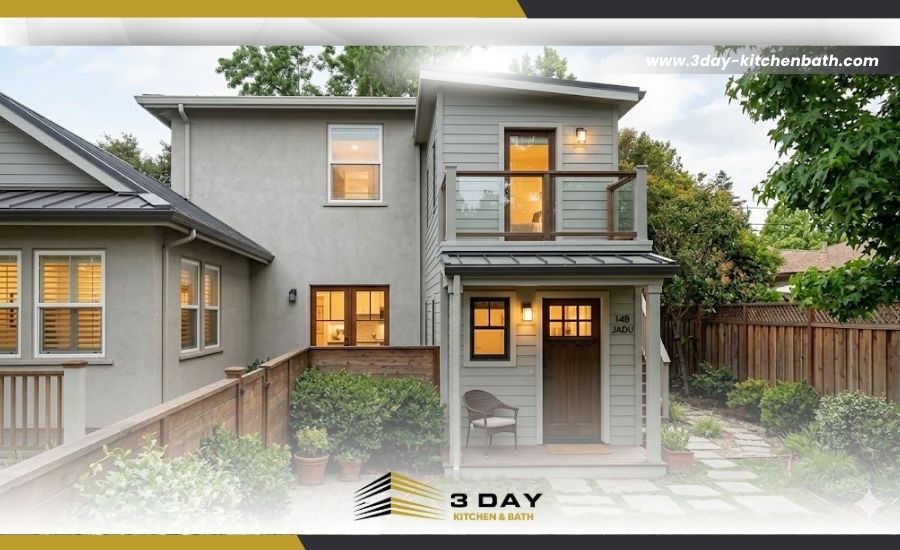
Rules for a Standard Accessory Dwelling Unit (ADU)
An accessory dwelling unit serves as a complete, independent home on your lot. It requires strict adherence to independent building codes to ensure it functions separately from your primary house:
- Kitchen Requirements: The unit requires permanent cooking facilities. This includes a standard sink, hardwired or gas-plumbed cooking appliances, and dedicated food preparation areas.
- Bathroom Privacy: The structure must contain its own private, code-compliant bathroom.
- Entrance Type: The unit requires a distinct exterior entrance for independent access.
- Size Limits: Most municipalities permit these structures to reach up to 1,200 square feet, contingent on your lot dimensions and setbacks.
Rules for a Junior Accessory Dwelling Unit (JADU)
A JADU offers a localized way to create rental space using your existing square footage. It repurposes an attached garage or spare bedroom:
- Kitchen Type: Codes only mandate an efficiency kitchen. This setup uses standard 120V plug-in appliances instead of high-voltage electric or dedicated gas lines.
- Shared Facilities: You can legally have the JADU share a bathroom with the main house, which eliminates costly plumbing additions.
- Internal Connection: A JADU requires an interior door that connects it directly to the main living area.
- Occupancy Laws: Municipalities often enforce owner-occupancy rules for JADUs. You generally must reside in either the main house or the JADU.
How to Choose Between a Junior ADU vs ADU for Your Lot
Selecting the correct structure depends on your long-term property strategy and capital. Weigh these technical factors to determine the most viable project:
- Available Space: Standalone units require a spacious yard with adequate setback clearances. JADUs work effectively for homeowners utilizing an existing spare bedroom or attached garage.
- Budget Limits: JADUs cost significantly less because you bypass foundation pouring and major framing. A detached unit requires heavy site preparation but yields higher rental rates.
- Privacy Needs: A detached unit isolates noise and activity. A JADU shares an interior wall and potentially a bathroom with your primary household.
- Resale Value: Building a standalone unit adds new square footage, which strongly impacts your property appraisal. You can review standard building definitions regarding property additions via the International Residential Code (IRC).
- Rental Limits: Many local ordinances mandate that you rent out either unit for terms longer than 30 days. Short-term rentals are frequently restricted.
Why You Must Hire Licensed Contractors for ADU Permits
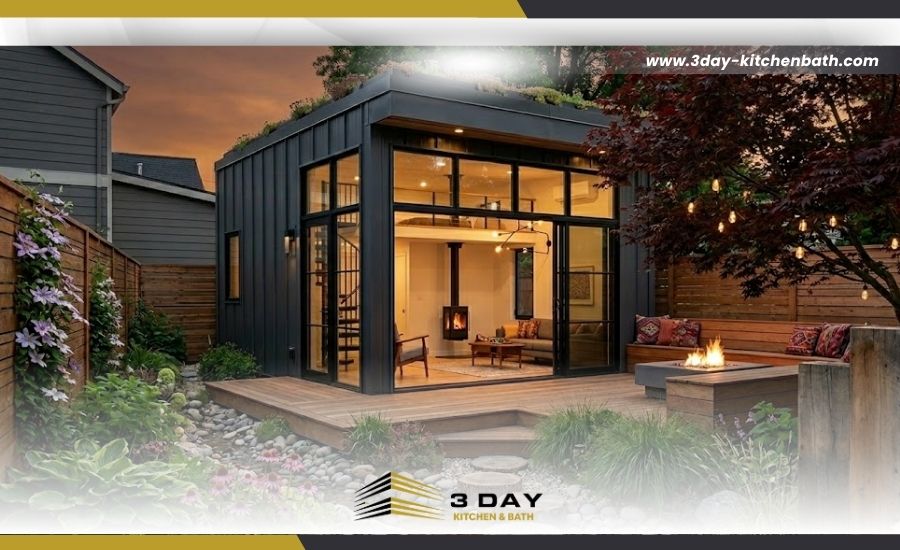
Constructing a habitable unit involves structural engineering, load calculations, and strict zoning approvals. Hiring qualified builders ensures your project complies with municipal standards and passes municipal inspections:
- Permit Handling: Contractors secure necessary municipal approvals, preventing costly stop-work orders and project delays. You can review state-level guidance on these mandates through the California Department of Housing and Community Development (HCD).
- Code Compliance: Builders verify that fire separation walls, egress windows, and utility connections meet the legal standards for habitability.
- Cost Accuracy: A licensed contractor provides a precise bid covering everything from soil grading to the final mechanical installations.
- Utility Management: Electricians calculate whether your existing 100-amp or 200-amp electrical panel can handle the increased load, or if you require a heavy-up service upgrade.
Plan Your Junior ADU vs ADU Construction Project
Maximizing your property requires you to balance construction costs against the concrete value of new living space. A detached unit demands heavy upfront capital but delivers maximum independence and high rental yields. A JADU offers a rapid, low-cost path to rental income using the walls you already own.
Analyze your lot dimensions, review your utility capacity, and establish a firm budget to select the unit that meets your objectives. Partnering with experienced ADU contractors in San Diego ensures your blueprints translate into a safe, code-compliant structure. Once you've settled on a layout, work through our ADU checklist to keep permitting and construction on track.
3 Day Kitchen & Bath is a home remodeling contractor in San Diego CA specializing in kitchen and bathroom transformations for homeowners seeking to modernize their space.
Frequently Asked Questions
What is the difference between a JADU and a full ADU?
A standard ADU is a larger, fully independent unit up to 1,200 square feet that can be detached from the house. A JADU is restricted to 500 square feet, must be built within the existing home or attached structures, and can share a bathroom with the main home.
Can I have both an ADU and a JADU on my property?
In many jurisdictions, you are allowed to have one of each on a single-family lot. This allows you to create two separate rental income streams on the same property.
What are the kitchen requirements for a Junior ADU?
A JADU only requires an efficient kitchen, which must include a sink and a food preparation counter. It also needs a small cooking appliance, but this can often be a standard plug-in unit rather than a hardwired stove.
Does a JADU require a separate bathroom?
No, a JADU is legally permitted to share a bathroom located within the primary residence. This is a major cost-saving feature for homeowners converting a single room into a rental unit.
What are the owner-occupancy rules for JADUs?
Owner-occupancy may be required depending on local rules, especially if the JADU shares facilities with the main home. You must reside in either the primary home or the JADU, whereas standard ADUs often allow you to rent out both units while living elsewhere.

3 Day Kitchen & Bath
10620 Treena St Suite 230,
San Diego, CA 92131
Recent Posts
-

8 Signs It's Time to Remodel Your Kitchen
Sep 08, 2026