

A bathroom remodel goes wrong in fairly predictable ways. We've walked into enough finished-by-someone-else bathrooms to know the mistakes usually aren't dramatic. They're small decisions made early, often to save a little time or money, that turn into bigger problems once the tile is down and the room is sealed back up. Here are the seven that cost homeowners the most, in money, redo work, or both, before you start planning your own bathroom remodel.
- Skipping Real Ventilation Planning
- Choosing Materials That Can't Handle Constant Moisture
- Underestimating the Plumbing and Electrical Work Behind the Walls
- Not Budgeting for What's Behind the Tile
- Picking Style Over Function in a Small Footprint
- Forgetting Storage Until It's Too Late
- Hiring Based on Price Alone
- Frequently Asked Questions
- What's the most common bathroom remodel mistake?
- How much should I budget beyond the visible finishes?
- Do I need a permit to remodel a bathroom?
- How do I check if a contractor is actually licensed?
- Can I skip a ventilation fan if my bathroom has a window?
Skipping Real Ventilation Planning
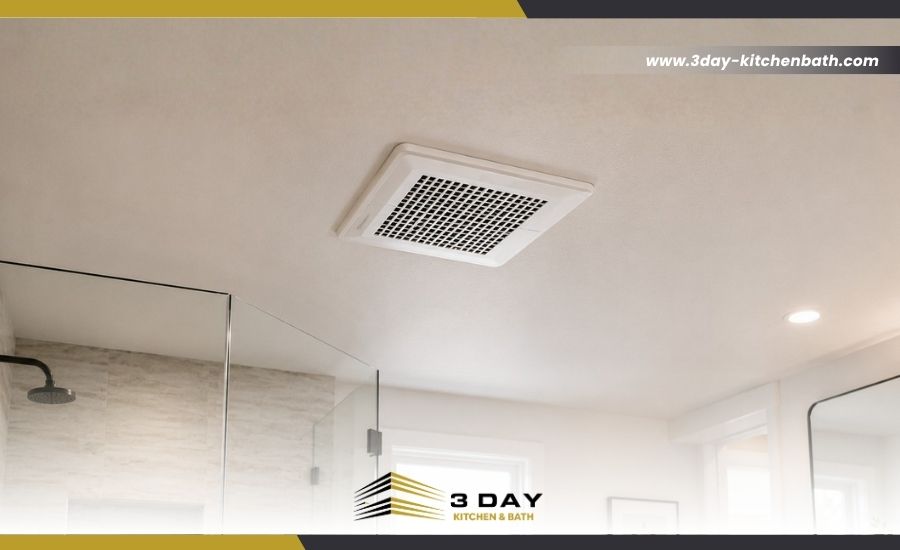
This is the mistake with the most expensive downstream consequences, and it's also the easiest to get wrong without realizing it. Bathrooms generate more moisture than almost any other room in the house, and that moisture has to go somewhere. Building code guidance (IRC and ASHRAE 62.2) calls for a mechanical exhaust fan rated at 50 CFM for intermittent use or 20 CFM for continuous use, and the U.S. Department of Energy's own guidance on bathroom exhaust fans is direct about it: "operable windows should not be relied on for consistent bathroom ventilation." A window that opens is nice. It isn't ventilation. Skip a properly sized, properly vented fan, and you're not risking a vague "moisture problem." You're setting up the exact conditions mold needs behind the walls you just paid to finish.
Choosing Materials That Can't Handle Constant Moisture
Not every tile, grout, or cabinet material is built for a room that's damp most days of the week. This shows up years later as swollen cabinet bases, grout that stains no matter how often it's cleaned, or a "waterproof" laminate that wasn't actually rated for a wet room. Material selection is one of the least exciting parts of a remodel to think about upfront, and one of the most expensive to fix after the fact.
Underestimating the Plumbing and Electrical Work Behind the Walls
Moving a toilet three feet, adding a second sink, or relocating a shower can sound like a simple layout change on paper. Behind the wall, it often means rerouting supply lines, drain lines, and vent stacks, sometimes with real structural or code implications. This is also where projects most often trigger the need for a permit, so don't assume a layout change is purely cosmetic without checking when a building permit is required first.
Not Budgeting for What's Behind the Tile
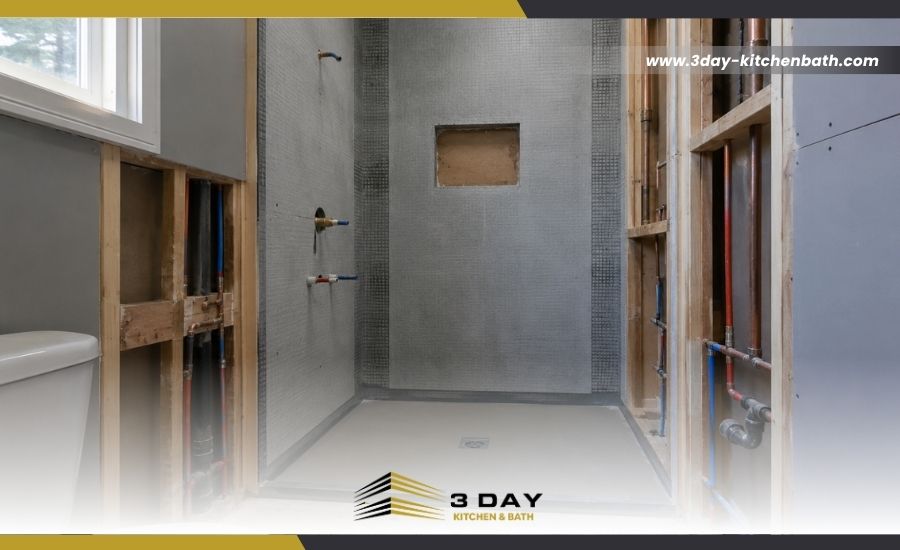
The visible finishes (tile, vanity, fixtures) are the easy part to price out, and the part most homeowners budget around. The harder-to-predict costs are usually behind them: subfloor damage found once old tile comes up, outdated plumbing that needs replacing rather than reusing, or electrical that doesn't meet current code once the walls are open. Our guide on how to budget for a home renovation walks through building in room for exactly this kind of surprise, rather than getting blindsided by it mid-project.
Picking Style Over Function in a Small Footprint
Most bathrooms are working with a tight, fixed footprint, and every design choice inside that space has to earn its place. A soaking tub looks great in a photo, but if it eats the floor space a family of four actually needs for a functional layout, it's the wrong call for that bathroom. It helps to check average bathroom dimensions before locking in a soaking tub or double vanity, since a layout that looks great on paper doesn't always fit the way you're picturing it.
Forgetting Storage Until It's Too Late
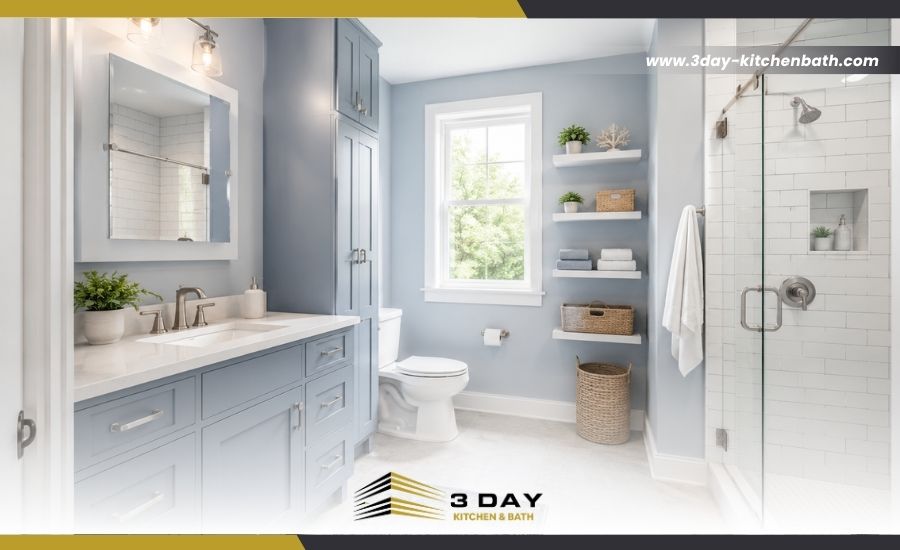
Storage tends to get decided last, after the tile, the vanity style, and the fixtures are already locked in. That's exactly backward, since storage is usually the hardest thing to add once the layout is set. A recessed medicine cabinet, a linen niche, or a vanity with real drawer storage instead of just doors all need to be planned into the wall and cabinetry design from the start. None of that works squeezed in afterward.
Hiring Based on Price Alone
The lowest bid is sometimes just the lowest bid, and sometimes it's a sign of shortcuts you won't see until the project's underway. In California, most remodeling work over $1,000 legally requires a licensed contractor, and you can verify any contractor's license number directly through the CSLB's public license lookup before signing anything. A quick check takes a few minutes and tells you a lot more than a bid amount ever will.
3 Day Kitchen & Bath has worked through these exact issues on bathroom projects across San Diego County, from Chula Vista to Poway. We'd rather flag them before a contract is signed than after the tile's already down. If you're weighing a bathroom remodel and want a second opinion on any of these, we're happy to take a look.
Frequently Asked Questions
What's the most common bathroom remodel mistake?
Underventilating the space. It doesn't cause visible problems right away, which is exactly why it gets skipped. But moisture buildup behind walls and under flooring is one of the most expensive things to fix after the fact.
How much should I budget beyond the visible finishes?
There's no single number that fits every project, since it depends heavily on your home's age and what's already behind the walls. Building in a real contingency, rather than assuming the visible finishes are the whole cost, is the more useful habit than chasing a specific percentage.
Do I need a permit to remodel a bathroom?
Often yes, especially if you're moving plumbing fixtures or doing electrical work, though it depends on the specific scope. Check our permit guide before assuming a layout change is purely cosmetic.
How do I check if a contractor is actually licensed?
In California, you can look up any contractor's license status directly through the CSLB's free online lookup tool using their license number or business name, before you sign anything.
Can I skip a ventilation fan if my bathroom has a window?
Building code guidance explicitly advises against relying on an operable window for consistent bathroom ventilation. A window helps, but it isn't a substitute for a properly sized exhaust fan.

3 Day Kitchen & Bath
10620 Treena St Suite 230,
San Diego, CA 92131
Recent Posts
-

8 Signs It's Time to Remodel Your Kitchen
Sep 08, 2026