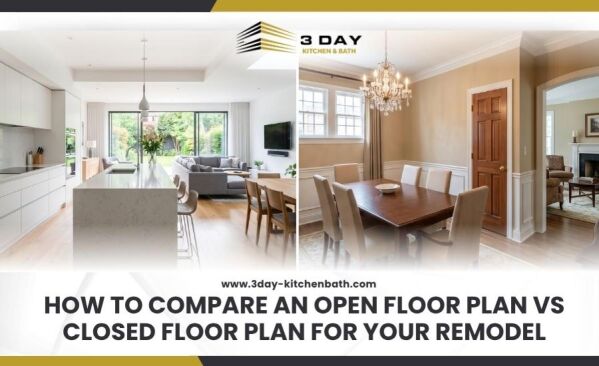
Choosing between an open floor plan vs closed floor plan requires a specific choice. You must prioritize either shared, connected spaces or private, segmented rooms. An open floor plan removes interior walls to combine your kitchen, dining, and living areas. A closed floor plan relies on walls and doors to separate specific rooms by function. Your layout dictates your daily routine, how noise travels, and your total remodeling budget.
- What Are the Benefits of an Open Floor Plan?
- What Are the Advantages of a Closed Floor Plan?
- How Do Structural Rules Affect Your Layout Choice?
- What Are the Hidden Costs of Removing Interior Walls?
- How to Choose the Best Floor Plan for Your Remodel
- Frequently Asked Questions
- Is an open floor plan more expensive than a closed layout?
- Does an open floor plan increase home value?
- Can you convert a closed floor plan into an open layout later?
- Which layout is better for small homes?
- Are open floor plans going out of style?
What Are the Benefits of an Open Floor Plan?
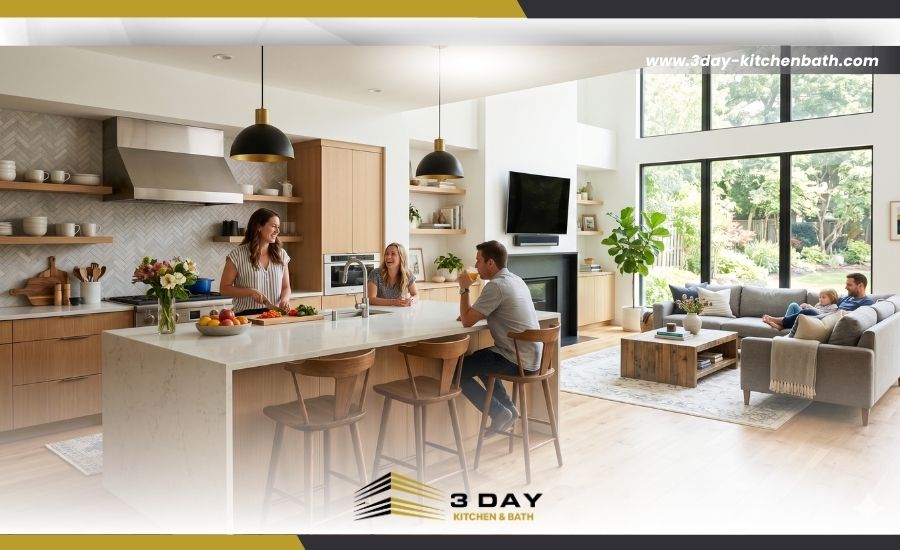
An open floor plan removes framing to create a single, expansive environment. Cooking, dining, and relaxing happen in one shared zone. Many modern layouts rely on established interior design space planning to maximize usable square footage. You can review various open concept floor plans to see the structural shifts involved in this design.
Here are the primary benefits of an open layout:
- Clear sightlines allow you to monitor children or guests while cooking.
- Unobstructed pathways allow natural sunlight to reach the center of the house.
- Large kitchen islands replace load-bearing walls to provide dual dining and prep stations.
However, removing walls eliminates acoustic barriers. Cooking noises and television audio will echo across the house. You also sacrifice vertical wall space required for upper cabinetry. Furthermore, heating and cooling a massive open area requires robust HVAC performance to meet California's Title 24 energy efficiency standards.
What Are the Advantages of a Closed Floor Plan?
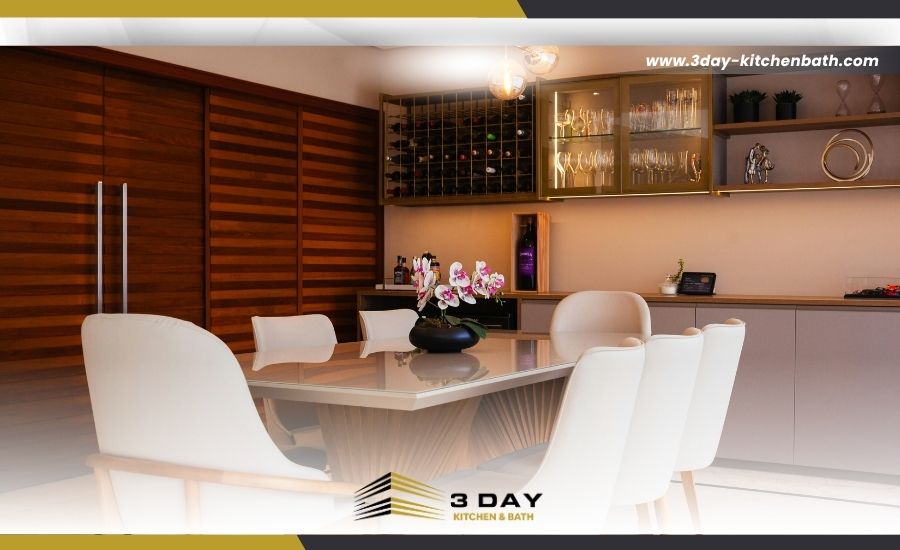
A closed floor plan separates living areas using framing and solid doors. Homeowners seeking structure and privacy increasingly favor this traditional approach. The defined rooms control auditory and visual distractions.
Here are the functional advantages of a closed layout:
- Drywall naturally blocks noise transmission, allowing for quiet home offices.
- Additional wall square footage supports more upper cabinets and storage shelving.
- Kitchen clutter remains hidden from the formal living and dining spaces.
Zoned HVAC systems also work more efficiently when doors restrict airflow. You can lower utility costs by heating and cooling individual rooms. On the downside, individual rooms limit natural light penetration. The segmented design can also make homes feel confined during large social gatherings.
How Do Structural Rules Affect Your Layout Choice?
You cannot demolish walls without understanding your home's structural framing. Many interior walls are load-bearing. They carry the weight of the roof or second story down to the foundation. Removing a load-bearing wall requires a licensed structural engineer to specify a laminated veneer lumber (LVL) or steel I-beam replacement. These engineering realities also apply when assessing structural loads for ADU ideas on your property.
Never begin demolition without proper permits. City building departments require stamped architectural plans for structural modifications. You must adhere to national building codes and local California regulations. Modifying layouts often triggers mandatory upgrades to your existing electrical panels, plumbing vents, or hardwired smoke detector systems.
What Are the Hidden Costs of Removing Interior Walls?
Opening up a floor plan carries significant mechanical expenses. Interior walls hide critical mechanical, electrical, and plumbing (MEP) systems. Demolition requires licensed tradespeople to reroute these utilities safely. Rerouting plumbing vent stacks or HVAC return ducts through the ceiling joists adds thousands to a remodeling budget.
Interior walls also act as shear walls. They prevent the house from racking during high winds or earthquakes. Removing them weakens the structure. You may need to install specialized plywood shear panels elsewhere to meet standard seismic retrofitting guidelines. Maintaining a closed layout eliminates these complex engineering expenses.
How to Choose the Best Floor Plan for Your Remodel
Both layouts serve specific functions. An open floor plan delivers a bright, communal environment. A closed floor plan offers acoustic privacy, dedicated storage, and focused utility. Base your layout decision on your daily routine, your structural budget, and your privacy requirements.
When you are ready to alter your floor plan, hire professionals to manage the structural engineering and design. The experienced team at 3 Day Kitchen & Bath will guide you through a compliant, efficient home remodel in San Diego.
3 Day Kitchen & Bath is a home remodeling contractor in San Diego CA specializing in kitchen and bathroom transformations for homeowners seeking to modernize their space.
Frequently Asked Questions
Is an open floor plan more expensive than a closed layout?
Yes. Open layouts require costly wall removal, structural steel or LVL beams, and the rerouting of hidden plumbing, electrical, and HVAC systems.
Does an open floor plan increase home value?
It often boosts property value because buyers favor connected layouts. However, the exact return on investment depends on your local market and execution quality.
Can you convert a closed floor plan into an open layout later?
Yes. You can alter the layout later, but you must secure permits and hire a structural engineer to address load-bearing framing and utility lines.
Which layout is better for small homes?
Open layouts make small homes feel significantly larger and brighter by maximizing light. Closed layouts maximize vertical storage in tight footprints.
Are open floor plans going out of style?
No. However, modern design trends now favor a hybrid approach. Homeowners want a primary open living space paired with closed, soundproofed rooms for working remotely.

3 Day Kitchen & Bath
10620 Treena St Suite 230,
San Diego, CA 92131
Recent Posts
-

8 Signs It's Time to Remodel Your Kitchen
Sep 08, 2026