Meeting ADU electrical requirements means installing a dedicated system that safely handles modern power loads. You must install a dedicated 100-amp to 125-amp subpanel, route 20-amp circuits for kitchens and baths, and upgrade your property's main panel to 200 amps. Review an ADU checklist before trenching or wiring to define your project scope and prevent costly inspection failures.
A code-compliant electrical layout protects your property and supports heavy loads like HVAC systems and electric vehicle chargers. Proper planning ensures your accessory dwelling unit passes municipal inspections on the first attempt.
- Essential ADU Power Needs and Component Sizing
- Early Electrical Planning Resources
- How ADU Electrical Codes Affect San Diego Builds
- Common Garage Conversion Electrical Mistakes to Avoid
- Do You Need a 200 Amp Service Upgrade for Your ADU?
- Why Existing Garage Wiring Fails ADU Electrical Requirements
- Hire Expert ADU Contractors for Code Compliance
- Frequently Asked Questions
- Is complying with ADU electrical requirements mandatory?
- What size panel does an ADU need?
- Can an ADU share the main electrical meter?
- Do underground wires need protection?
- Are solar panels required for ADUs?
Essential ADU Power Needs and Component Sizing
Every ADU requires a distinct electrical layout to prevent circuit overloads. You must size components accurately to manage daily residential use. This requires dedicated circuits, an independent subpanel, and a main panel service upgrade.
Use an ADU checklist to map out your specific electrical needs before pulling permits.
Electrical scope also depends on which unit you're building. A Junior ADU vs. a full ADU often means very different load requirements, so confirm which type of ADU fits your property before finalizing panel size.
| Electrical Component | Standard Requirement | Purpose |
| Dedicated circuits | 20-amp lines (kitchen/bath) | Prevents overload from high-draw appliances |
| Subpanel | 100–125 amp | Separates ADU electrical load from the main house |
| Main panel | 200 amp total service | Supports combined property power demand |
Early Electrical Planning Resources
These components operate together to maintain system stability. Undersizing panels or combining heavy appliance loads onto single circuits will result in failed inspections and persistent breaker trips.
How ADU Electrical Codes Affect San Diego Builds
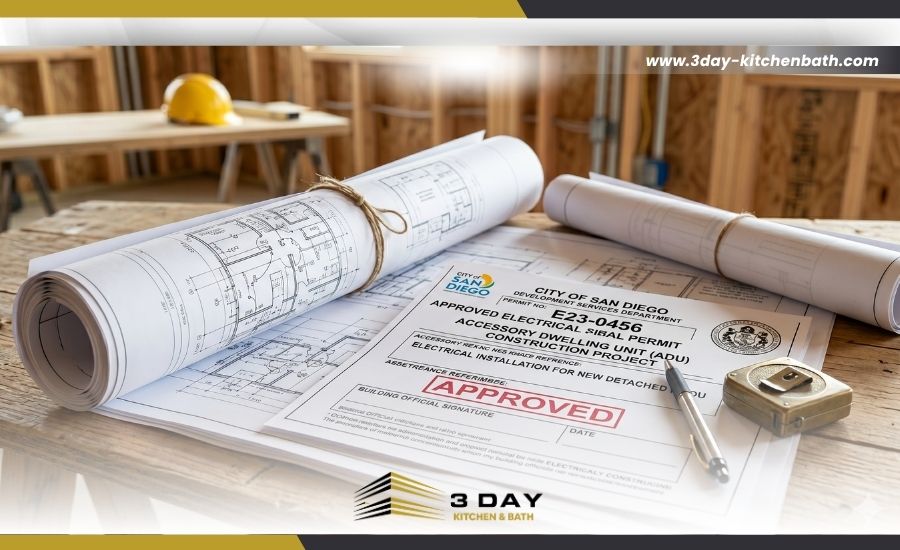
All electrical work must comply with strict safety standards before obtaining a certificate of occupancy. San Diego projects use the National Electrical Code (NEC), established by the National Fire Protection Association (NFPA), as the baseline for fire prevention and safe wiring.
Local municipal codes mandate additional efficiency standards. These regulations often require solar readiness, specialized energy-efficient lighting, and restricted gas appliance usage. You must secure the correct types of permits for a remodel before starting construction to ensure compliance with both national and local mandates.
Common Garage Conversion Electrical Mistakes to Avoid
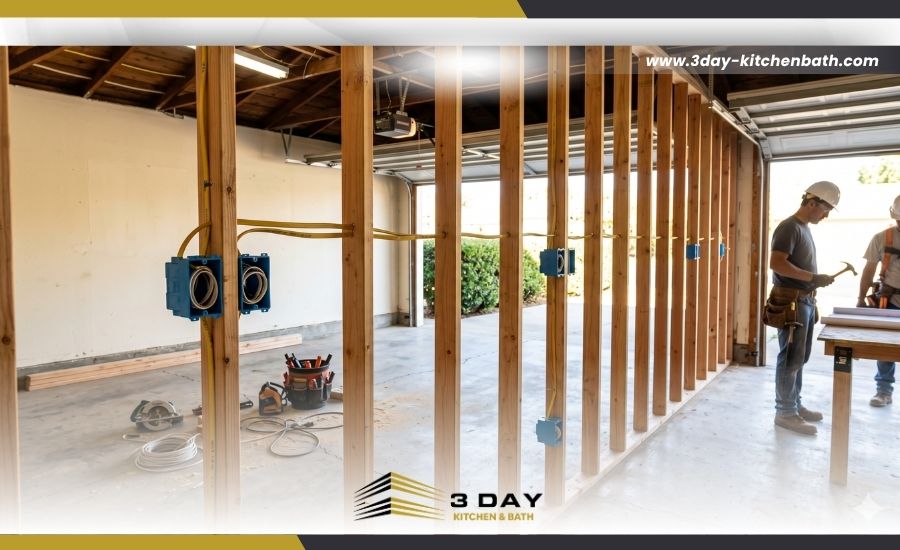
Property owners frequently fail rough-in electrical inspections due to poor planning. Most electrical errors occur during the design phase rather than the installation phase.
Avoid these frequent compliance failures:
- Skipping formal load calculations, causing overloaded electrical systems
- Retaining outdated main panels incapable of supporting modern appliance demands
- Underestimating the total amperage required for heating, cooling, and cooking equipment
A standard 100-amp panel rarely supports a primary residence and a fully equipped ADU. Scheduling panel upgrades early prevents construction delays.
Do You Need a 200 Amp Service Upgrade for Your ADU?
In most cases, yes. Older homes lack the capacity to power two distinct living spaces simultaneously.
If your current electrical system fails a load calculation, you must install:
- A main panel upgrade to 200 amps minimum
- A dedicated 100-amp or 125-amp subpanel for the ADU
- New, isolated circuits for high-load appliances
Executing these upgrades during the rough-in phase keeps your project on schedule and eliminates the risk of an overloaded system.
Why Existing Garage Wiring Fails ADU Electrical Requirements
Standard garage wiring does not meet residential code for permanent living spaces. Builders never designed these circuits to handle induction ranges, water heaters, or full-time HVAC usage.
Older garage electrical systems typically:
- Lack proper grounding for modern electronics
- Use outdated or undersized wire gauges
- Trip breakers under moderate residential loads
You must replace existing garage wiring to meet current safety codes. Code also dictates that you install GFCI protection in all wet zones, including kitchens and bathrooms, to prevent ground-fault hazards.
Hire Expert ADU Contractors for Code Compliance
Accurate electrical planning guarantees safety, energy efficiency, and strict code compliance. It secures your permits and prevents failed municipal inspections.
Working with experienced ADU contractors in San Diego ensures your project utilizes accurate load calculations and passes inspections on the first attempt.
3 Day Kitchen & Bath is a home remodeling contractor in San Diego CA specializing in kitchen and bathroom transformations for homeowners seeking to modernize their space.
Frequently Asked Questions
Is complying with ADU electrical requirements mandatory?
Yes. Electrical codes are legally enforced. Failing to meet them results in denied permits, municipal fines, and mandatory rework before you can obtain a certificate of occupancy.
What size panel does an ADU need?
Most ADUs require a 100-amp or 125-amp subpanel. The exact size depends on the required load calculation, appliance draw, heating systems, and overall square footage.
Can an ADU share the main electrical meter?
Yes, many ADUs share a primary meter with the main home. Homeowners can also install separate sub-meters to accurately track energy consumption and simplify billing.
Do underground wires need protection?
Yes. Code requires underground electrical lines to be buried at specific depths and encased in approved conduit, typically rigid PVC, to protect against moisture and mechanical damage.
Are solar panels required for ADUs?
California energy codes often require solar panel installations for newly constructed, detached ADUs. Local regulations determine the exact threshold for solar readiness or full system requirements.

3 Day Kitchen & Bath
10620 Treena St Suite 230,
San Diego, CA 92131
Recent Posts
-

8 Signs It's Time to Remodel Your Kitchen
Sep 08, 2026