

Open concept floor plans are residential layouts that combine two or more traditional rooms—typically the kitchen, dining, and living areas—into a single, continuous space by removing partition walls. While this layout creates a larger footprint, it requires professional evaluation of your home's structural load paths and mechanical systems before you begin demolition.
This project involves major construction. Removing walls alters how your home supports its roof and floors. It also impacts your heating, cooling, and electrical routing. In this guide, you will learn the structural requirements, engineering standards, and execution steps necessary for a safe remodel.
- What Defines an Open Concept Floor Plan
- Benefits of Open Concept Floor Plans
- Disadvantages of Open Concept Floor Plans
- How a Professional Remodeling Contractor Guarantees Safety
- Design Your Perfect Open Concept Floor Plan
- Frequently Asked Questions
- How do I know if a wall is load-bearing before removing it?
- What kind of beam is needed for an open concept remodel?
- Does an open floor plan decrease home value in 2026?
- How do you define spaces in a large open floor plan?
- Will an open floor plan make my home harder to heat?
What Defines an Open Concept Floor Plan
An open concept floor plan eliminates interior barriers. Hidden structural elements replace these walls to maintain the stability of the building.
- Integrated Zones: The kitchen, dining area, and living room operate as one space. They lack floor-to-ceiling dividers.
- Structural Spans: Heavy-duty supports carry the overhead structural loads. Projects often use steel I-beams or engineered wood, like Laminated Veneer Lumber (LVL).
- Visual Continuity: Sightlines stay open across the house. This improves natural light distribution and social interaction.
Benefits of Open Concept Floor Plans
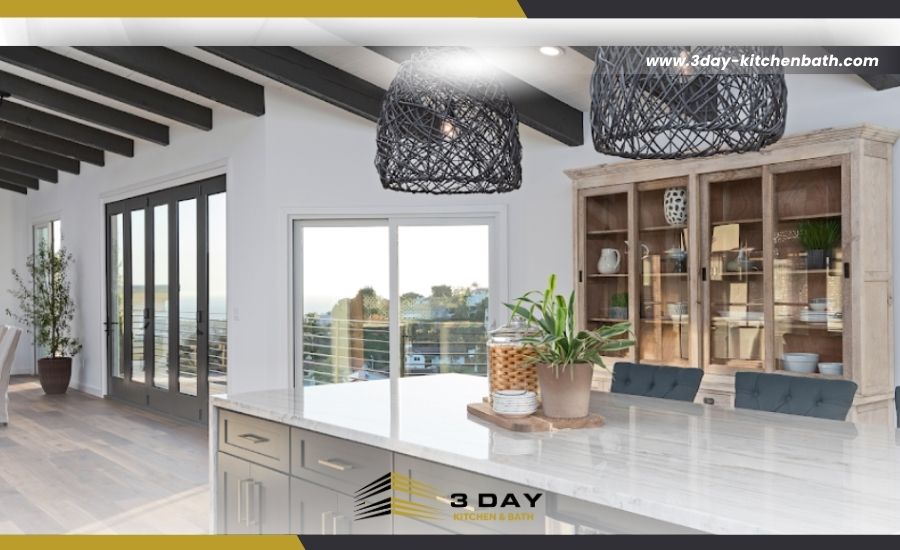
Removing walls improves both functionality and property value. Homeowners choose this layout to solve the problem of cramped rooms and improve daily living:
- Better Natural Light: Sunlight from opposite windows reaches the center of the home.
- Improved Social Flow: You can monitor children or talk with guests while cooking in your newly updated kitchen space.
- Increased Property Value: Buyers actively look for open layouts. A professionally engineered space yields a strong return on investment.
- Flexible Furniture Layouts: You can adjust seating and dining areas without fixed walls blocking your setup.
Disadvantages of Open Concept Floor Plans
Open spaces introduce specific technical challenges. You must plan for acoustic control and energy efficiency before the project begins:
- Acoustic Noise Travel: Sound waves bounce without physical barriers. Noise from appliances and televisions carries across the room.
- Higher Utility Costs: Heating or cooling a large space requires more energy. You often need HVAC system upgrades to maintain efficiency.
- Reduced Privacy: The layout offers fewer quiet areas for remote work or private conversations.
- Visible Messes: Kitchen clutter remains visible from the main living area.
How a Professional Remodeling Contractor Guarantees Safety
Wall removal requires strict adherence to building codes. A professional remodeling contractor manages the physics and legal requirements to keep your house structurally sound:
- Structural Engineering: Experts calculate weight loads. They determine the exact size needed for a steel beam or wood header.
- Utility Rerouting: Licensed tradesmen move plumbing, wiring, and HVAC ducts previously hidden in the walls.
- Permit Compliance: A contractor secures the necessary paperwork. This ensures your project meets all building standards and passes city inspections.
- Cost Accuracy: Experienced builders spot structural issues early. This prevents expensive delays after demolition begins.
Design Your Perfect Open Concept Floor Plan
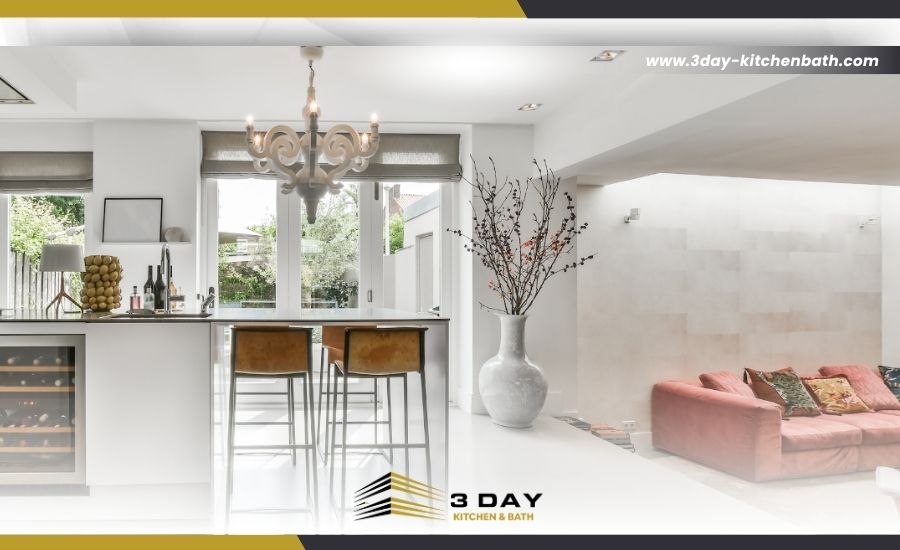
Transitioning your layout is a major investment. You must balance design goals with structural limits. Focus on proper engineering to create a functional space. Success requires thorough planning and expert risk management.
Making sure your home is safe protects your family and your property value. 3 Day Kitchen & Bath is a home remodeling contractor in San Diego, CA, specializing in kitchen and bathroom transformations for homeowners seeking to modernize their space. We manage these complex structural changes to complete your project with precision.
Design a space that works for your daily life without sacrificing structural integrity. Connect with our experts for home remodeling in San Diego today.
Frequently Asked Questions
How do I know if a wall is load-bearing before removing it?
You cannot tell by looking at the drywall. A contractor or structural engineer must inspect the framing in the attic or basement. They check if the wall supports floor joists or roof loads.
What kind of beam is needed for an open concept remodel?
The beam depends on the span and the weight load. Builders use Laminated Veneer Lumber (LVL) for standard spans. Wider openings require a steel I-beam to prevent ceiling sag over time.
Does an open floor plan decrease home value in 2026?
No. Open concept floor plans hold strong market value. However, many buyers now request "broken-plan" layouts. This approach balances open space with subtle privacy barriers.
How do you define spaces in a large open floor plan?
You can define zones using different ceiling heights, kitchen islands, or distinct flooring materials. These visual breaks separate rooms without structural walls.
Will an open floor plan make my home harder to heat?
Yes, it often changes airflow and temperature control. You lose the ability to trap heat in smaller rooms. A contractor must evaluate your ductwork and insulation to keep the large space comfortable.

3 Day Kitchen & Bath
10620 Treena St Suite 230,
San Diego, CA 92131
Recent Posts
-

How to Build a Single-Story ADU with Garage
Apr 02, 2026 -

Where to Start House Renovation for a Smooth Remodel
Feb 12, 2026 -

Does Adding An ADU Increase Property Value
Feb 11, 2026