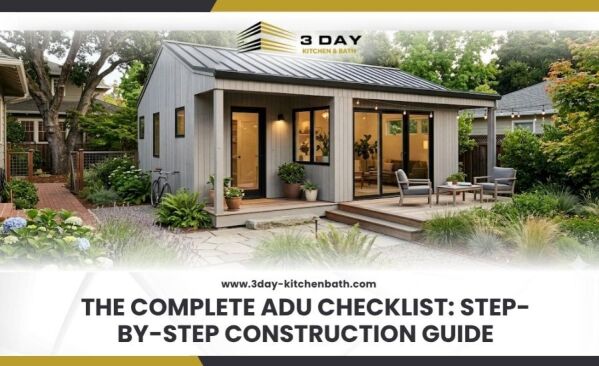
An ADU checklist is a sequential project management tool that guides homeowners through the planning, permitting, financing, and construction phases of building an Accessory Dwelling Unit. Building a backyard home requires precise coordination of local zoning laws, utility upgrades, and municipal building codes.
Using a structured checklist prevents costly delays and ensures your project meets all legal requirements from the initial site survey to the final Certificate of Occupancy. Plus, building an ADU is a great way to add value to your property, providing long-term equity and potential rental income.
- Phase 1: Pre-Construction and ADU Planning Checklist
- Phase 2: Budgeting and Financial Planning Checklist
- Phase 3: The ADU Construction Checklist
- Essential ADU Building Codes and Safety Requirements
- Why You Need a Professional Home Remodeling Contractor
- Finalize Your Build With a Complete ADU Checklist
- Frequently Asked Questions
- What is the first step in the ADU process?
- How do I plan for an ADU from start to finish?
- What should be included in an ADU design checklist?
- What is the penalty for building an ADU without a permit?
- What are the milestones in building an ADU?
Phase 1: Pre-Construction and ADU Planning Checklist
Proper planning determines what you can legally build on your property. You must verify site conditions and municipal constraints before breaking ground:
- Zoning and Allowable Size: Check local regulations to confirm your lot allows an ADU. Verify maximum square footage, height restrictions, and lot coverage limits.
- Property Line Setbacks: Measure the mandatory distance between your proposed structure and property boundaries. Most jurisdictions require standard 4-foot rear and side setbacks.
- Utility Capacity Assessment: Evaluate your main electrical panel and sewer lateral. Determine if your local municipality requires separate meters or if you can tie into existing lines.
- Topographic Land Survey: Hire a licensed surveyor to map property boundaries and identify utility easements. This prevents illegal encroachments onto neighboring land.
- Architectural Drafting: Commission formal blueprints. These must include floor plans, elevations, and structural engineering details required for permit approval.
Phase 2: Budgeting and Financial Planning Checklist
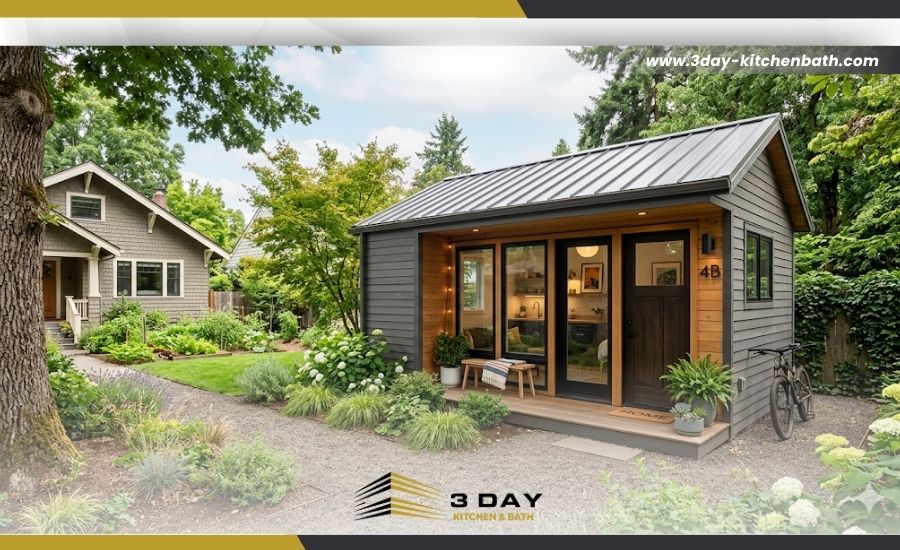
Securing your capital and tracking expenses prevents the project from stalling. Account for direct construction costs and municipal fees by hitting these financial milestones:
- Project Financing: Secure your capital early. Compare construction loans, home equity lines of credit (HELOCs), or cash reserves.
- Permits and Impact Fees: Budget for municipal fees. Cities charge for plan checks, building permits, and school district impact fees. State guidelines from the California Department of Housing and Community Development can help you understand standard fee structures.
- Contractor Bids: Request itemized proposals from licensed builders. Compare material allowances, labor costs, and projected timelines.
- Contingency Fund: Allocate a 10% to 15% reserve fund. This covers unforeseen site conditions like poor soil compaction or hidden utility lines.
- Property Tax Assessment: Consult your county assessor. Understand how the new structure affects your property's assessed value and annual tax bill.
Phase 3: The ADU Construction Checklist
The construction phase requires strict adherence to project sequencing. You must pass municipal inspections at key stages before proceeding to the next step:
- Site Preparation and Grading: Clear the build area. Excavate and compact the soil to prepare the ground for structural loads.
- Foundation and Underground Utilities: Trench for plumbing and electrical conduits. Pour the concrete slab or install the raised foundation system.
- Framing and Weatherproofing: Erect the structural walls and roof trusses. Install exterior sheathing, house wrap, and roofing materials to dry-in the structure.
- Mechanical, Electrical, and Plumbing (MEP) Rough-In: Route wires, pipes, and HVAC ducts through open wall cavities. Schedule municipal rough-in inspections before installing drywall.
- Interior Finishes and Final Fixtures: Hang drywall, install flooring, and mount cabinetry. Complete the build with plumbing fixtures, lighting, and paint.
Essential ADU Building Codes and Safety Requirements
Accessory Dwelling Units must meet the same strict residential building codes as standard homes. These regulations enforce mandatory safety and structural standards:
- Egress Requirements: Size bedroom windows and doors to allow emergency exit. Install hard-wired smoke and carbon monoxide detectors inside and outside sleeping areas.
- Fire Suppression Standards: Install fire sprinklers in the primary residence if they are required by local building codes for new construction, or if the residence already has them. Use fire-rated drywall for walls near property lines.
- Energy Efficiency Rules: Meet structural energy standards. Install high-efficiency HVAC units, properly rated insulation, and dual-pane windows to comply with Department of Energy guidelines or local mandates like California's Title 24.
- Privacy Mandates: Review local ordinances regarding window placement. Some cities restrict second-story windows that overlook neighboring yards.
- HOA Guidelines: Submit architectural plans to your Homeowners Association. Obtain written approval before applying for city permits.
Why You Need a Professional Home Remodeling Contractor
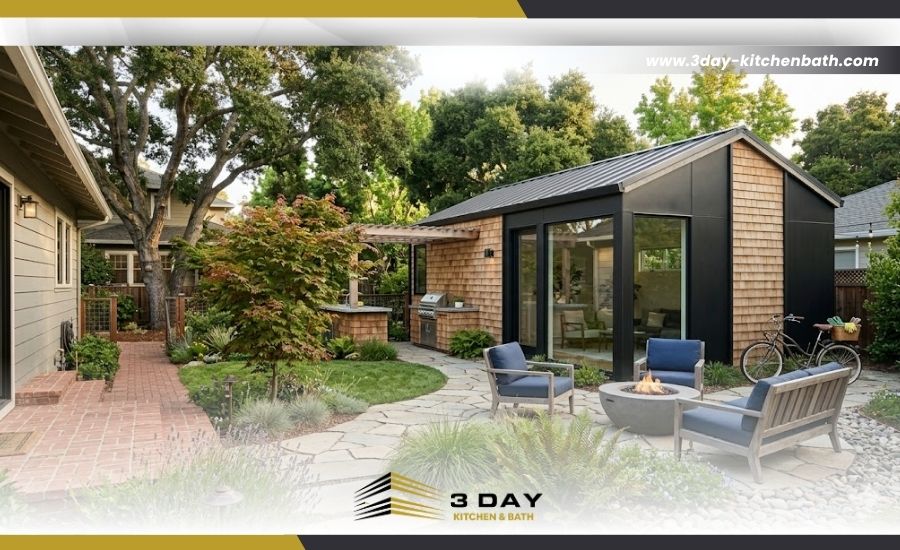
Managing a ground-up build requires technical expertise. Hiring an experienced professional mitigates risk and keeps the project on schedule:
- Code Compliance: Contractors interpret complex building codes. They ensure every structural element passes municipal inspections on the first attempt.
- Subcontractor Management: General contractors schedule specialized trades—like electricians and roofers—in the correct sequence to maintain project momentum.
- Permit Expediting: Experienced builders navigate the municipal permitting process. They submit accurate plans to minimize revision requests and bureaucratic delays.
- Risk Mitigation: Licensed contractors carry workers' compensation and general liability insurance. This protects your personal assets during the construction phase.
Finalize Your Build With a Complete ADU Checklist
Building an ADU is a complex technical process that yields long-term property value. Following an ADU checklist ensures you meet all legal, financial, and structural requirements. Once you pass the final municipal inspection, your property is ready for immediate occupancy or rental income. 3 Day Kitchen & Bath is a home remodeling contractor in San Diego, CA, specializing in kitchen and bathroom transformations for homeowners seeking to modernize their space. We execute complex floor plans and manage strict building timelines to deliver high-quality backyard homes.
Start your project with a structural advantage. Connect with ADU contractors in San Diego to guide you through every milestone safely and legally.
Frequently Asked Questions
What is the first step in the ADU process?
The first step is a feasibility study. You must analyze local zoning laws, property lines, and utility constraints to confirm that an ADU is legally permissible on your lot.
How do I plan for an ADU from start to finish?
Establish a budget, draft architectural plans, and secure municipal permits. Then, hire a licensed contractor to manage site preparation, structural framing, and final finishing.
What should be included in an ADU design checklist?
Your design checklist must include floor plans, elevation drawings, structural engineering reports, utility connection diagrams, and a local energy code compliance report.
What is the penalty for building an ADU without a permit?
Unpermitted construction triggers municipal code enforcement. Penalties include daily fines, mandatory demolition orders, and the inability to rent or insure the structure legally.
What are the milestones in building an ADU?
Key milestones include permit issuance, foundation pouring, structural dry-in, rough-in MEP (mechanical, electrical, plumbing) approval, and the final Certificate of Occupancy.

3 Day Kitchen & Bath
10620 Treena St Suite 230,
San Diego, CA 92131
Recent Posts
-
How to Build a Single-Story ADU with Garage
Apr 02, 2026 -
Where to Start House Renovation for a Smooth Remodel
Feb 12, 2026